About Spoken Languages
Every language is a source of unique knowledge and cultural expression. Smaller languages provide us with new perspectives on the world. They give words to cultural phenomena, show us how people communicate and how a community forms its identity.
In the lecture series ‘About Spoken Languages’ six academics shine their light on a smaller or less known (and sometimes not standardised) language.
From the Rhineland to Mokum: The Journey of Yiddish, from Its Origins to the Printing Press in Early Modern Amsterdam
What do the Bible in Yiddish, old Amsterdam printing houses, and the word mesjogge have in common? How did Yiddish — the language of home and street — come into being, and how did early modern Amsterdam grow into the center of the Yiddish printing press?
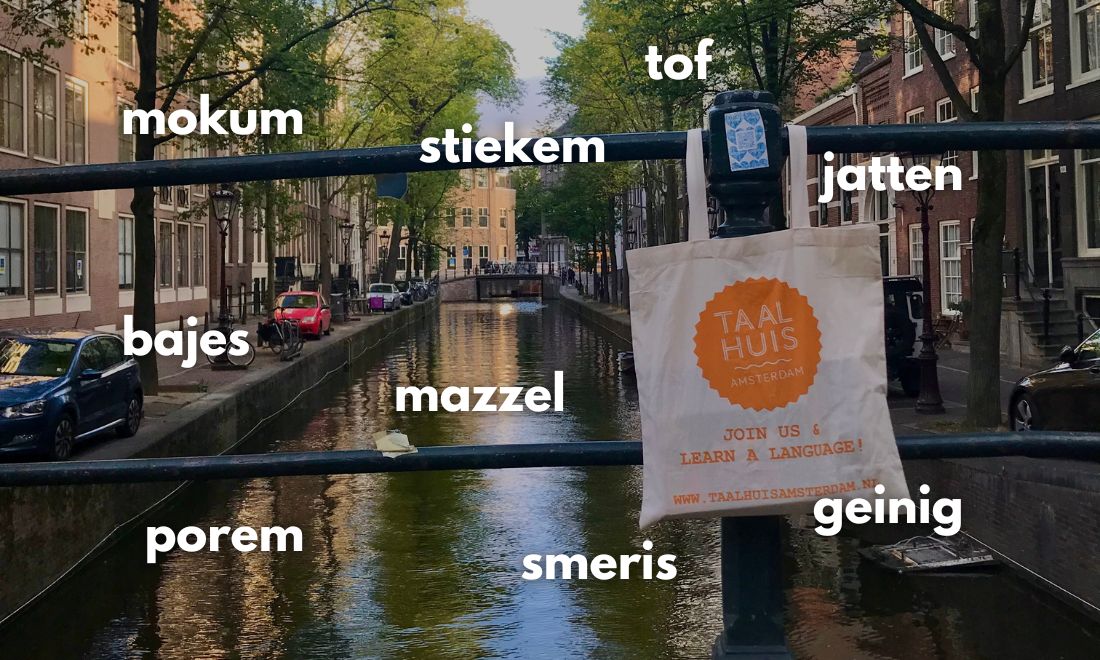
In this lecture, we take you from the first Yiddish texts in the Rhineland to the heyday of Amsterdam’s book printing industry. Through stories, prayers, proverbs, and early printed works, a vibrant culture comes to life — from living room to synagogue, from market to printing house. And even today, we still hear echoes of that past: words like mazzel, tof, goochem, and jatten reveal just how deeply Yiddish has penetrated the Dutch language.
Speaker: Justus van de Kamp
Historian and lexicographer Justus van de Kamp (Amsterdam, 1954) studied biology and history at the University of Amsterdam. He published, among other works, Het Philips-Kommando in Kamp Vught (2003), together with Peter Klein, and Koosjer Nederlands. Joodse woorden in de Nederlandse taal (2006), together with Jacob van der Wijk.
Van de Kamp writes in and translates to and from Yiddish, taught HOVO courses on Yiddish literature at VU University Amsterdam, and has been working since the late 1980s on a major Yiddish–Dutch dictionary, which is available free of charge at JiddischWoordenboek.nl.
Language of instruction: Dutch
This lecture is part of the series About Spoken Languages.
Other lectures in this series:
20 March: Cappadocian, Pontic, Pharasiot by Prof. Dr. Mark Janse
27 March: Catalan by Dr. Eva J. Daussá
10 April: Palestinian Arabic by Dr. Nina van Kampen
22 May: Frisian by Dr. Alexia Kerkhof
3 July: Sranan Tongo by Prof. dr. Abram de Swaan
€18 per lecture | entire series €95
Student rate*: €6 per lecture | entire series €30
Entry is not possible after the lecture has started.
*The student rate applies to students enrolled at a university or university of applied sciences. Select ‘Invoice’ as the payment method and indicate in the ‘Additional remarks’ field that you are a student.